Re-arrest and detention of human rights defender Naji Fateel following royal pardon
On 18 August 2026, authorities in Bahrain arrested Naji Fateel, a prominent human rights defender, during a pre-dawn raid at his home in East Riffa in connection with a financial liability arising from the 2015 Jau Prison riot case. He currently remains in detention in Jau Prison.
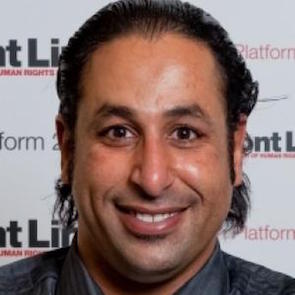 Naji Fateel is a Bahraini human right defender and co-founder of the Bahrain Youth Society for Human Rights NGO. He has worked on documenting human rights violations in Bahrain, advocated for the establishment of monitoring mechanisms and promoted human rights, including rights to freedom of expression and peaceful assembly and association, through his participation in peaceful pro-democracy activities.
His human rights work and previous detention have been documented by United Nations human rights mechanisms. In Opinion No. 65/2022, adopted on 14 November 2022, the UN Working Group on Arbitrary Detention (WGAD) found that Naji Fateel’s deprivation of liberty, which began in 2007, was arbitrary as it was linked to his peaceful exercise of fundamental rights as well as in violation of his right to a fair trial. On 8 April 2024, Naji Fateel was released following a royal pardon that included the release of approximately 1,500 prisoners.
On 18 August 2026, authorities in Bahrain arrested Naji Fateel, a prominent human rights defender, during a pre-dawn raid at his home in East Riffa in connection with a financial liability arising from the 2015 Jau Prison riot case. He currently remains in detention in Jau Prison.
Naji Fateel is a Bahraini human rights defender and co-founder of the Bahrain Youth Society for Human Rights NGO (BYSHR). He has worked on documenting human rights violations in Bahrain, advocated for the establishment of monitoring mechanisms and promoted human rights, including rights to freedom of expression and peaceful assembly and association, through his participation in peaceful pro-democracy activities. His human rights work has been documented by United Nations human rights mechanisms, including by the UN Working Group on Arbitrary Detention (WGAD). In their Opinion No. 65/2022, they found his previous detention, which began in 2007, to be arbitrary. On 8 April 2024, Naji Fateel was released following a royal pardon that included the release of approximately 1,500 prisoners.
On 18 August 2026, at approximately 5:45 am, plainclothes police officers reportedly raided Naji Fateel’s flat while he and his family were asleep. Officers entered the building after Naji Fateel’s mother opened the downstairs door. They proceeded upstairs to his flat having told his mother not to call him, forcefully entering his home. The officers did not present an arrest warrant or explain the reason for his arrest before taking him into custody.
It is reported that Naji Fateel was given only enough time to put on his clothes before being taken outside and placed on a police bus. On 20 August 2026, a colleague of Naji Fateel was informed that it was only after he had been placed on the bus that officers informed him that his arrest was in connection with an outstanding financial payment. On 20 August 2026, Naji Fateel was being held at East Riffa Police Station. Later that day, Naji Fateel’s family were informed that he had been transferred to Jau Prison. At the date of transfer, he had not been brought before the Public Prosecution.
The financial liability underlying Naji Fateel’s renewed detention relates to proceedings concerning the riot at Jau Prison on 10 March 2015, According to a witness, Naji Fateel was held in the same building where the clashes occurred, but was not involved in the events. On 25 January 2016, Naji Fateel and 56 other defendants were convicted of various offences and jointly ordered to pay BD 508,187.970 (approximately US$1.35 million) in compensation for alleged damages. Naji Fateel’s individual liability has been calculated at BD 8,915.600 (approximately US$23,700), with a repayment arrangement requiring monthly instalments of BD 375 (approximately US$996). Where individuals are unable to meet such payments, the authorities may enforce imprisonment through physical coercion (what is known as al-ikrah al-badani). According to reports, at the time that Naji Fateel was transferred on 20 August 2026, three other former political prisoners convicted in the same proceedings were being detained in Jau Prison, in connection with the same financial liabilities.
Prior to his arrest, Naji Fateel had in fact sought to resolve the outstanding financial payment. On 16 August 2026, two days before his arrest, it is reported that he spoke with officials and requested documentation confirming the amount he was required to pay so that he could seek a settlement. Officials instructed him not to attend the police station and instead to approach the Public Prosecution and Sentence Enforcement Judge. The subsequent decision to arrest him at his home, despite his stated efforts to cooperate with the authorities and resolve the matter, raises concern about the necessity and proportionality of his renewed deprivation of liberty.
The financial liability stems from the conviction of Naji Fateel during his detention, which was found to be arbitrary by the WGAD. In Opinion No. 65/2022, adopted on 14 November 2022, the Working Group found that his detention violated various articles enshrined in the Universal Declaration of Human Rights and the International Covenant on Civil and Political Rights and fell within categories I, II, III and V. The Working Group found, among other violations, that Naji Fateel had been deprived of his liberty without a sufficient legal basis, that he had been detained for exercising his rights to freedom of opinion and expression and peaceful assembly, and that serious violations of his right to a fair trial had occurred, including in the proceedings concerning the Jau Prison riot in 2015. These included but were not limited to, procedural irregularities, denial of adequate access to legal counsel, the use of mass trials and the admission of statements allegedly obtained through torture. The Working Group considered that the appropriate remedy was his immediate and unconditional release as well as an enforceable right to compensation and other reparations. They also called for a full and independent investigation into the circumstances of his arbitrary detention and alleged torture.
Front Line Defenders believes that the renewed imprisonment of Naji Fateel is directly related to his previous human rights activities as well as his status as a human rights defender and former political prisoner. His renewed imprisonment raises serious concerns regarding the treatment of individuals who were released under royal pardons but remain subject to financial liabilities arising from the cases they were pardoned for.
Front Line Defenders urges the authorities in Bahrain to:
- Immediately and unconditionally release Naji Fateel and ensure that he is not subjected to any further imprisonment, judicial harassment or other restrictions solely in relation to financial liabilities arising from the cases covered by the 2024 royal pardon;
- Immediately halt the imprisonment of other individuals released under royal pardons solely on account of their inability to meet financial liabilities arising from the cases for which they were pardoned, and clarify the legal effect of the 2024 royal pardon on such liabilities;
- Ensure that Naji Fateel has immediate and regular access to his lawyer, family and any medical care he may require, and that he is treated in accordance with international standards for the treatment of prisoners;
- Conduct a prompt, thorough and independent investigation into the circumstances of Naji Fateel's arrest on 18 August 2026, including the authorities’ reported failure to present an arrest warrant or provide the reasons at the time of arrest, and ensure that any officials found responsible for violations are held accountable;
- Take all necessary measures to implement Opinion No. 65/2022 of the UN Working Group on Arbitrary Detention, including providing Naji Fateel with an effective remedy and reparations as well as ensuring an independent investigation into the violations identified by the Working Group; and
- Guarantee in all circumstances that all human rights defenders in Bahrain are able to carry out their legitimate and peaceful human rights activities without fear of reprisals, judicial harassment or other restrictions.

