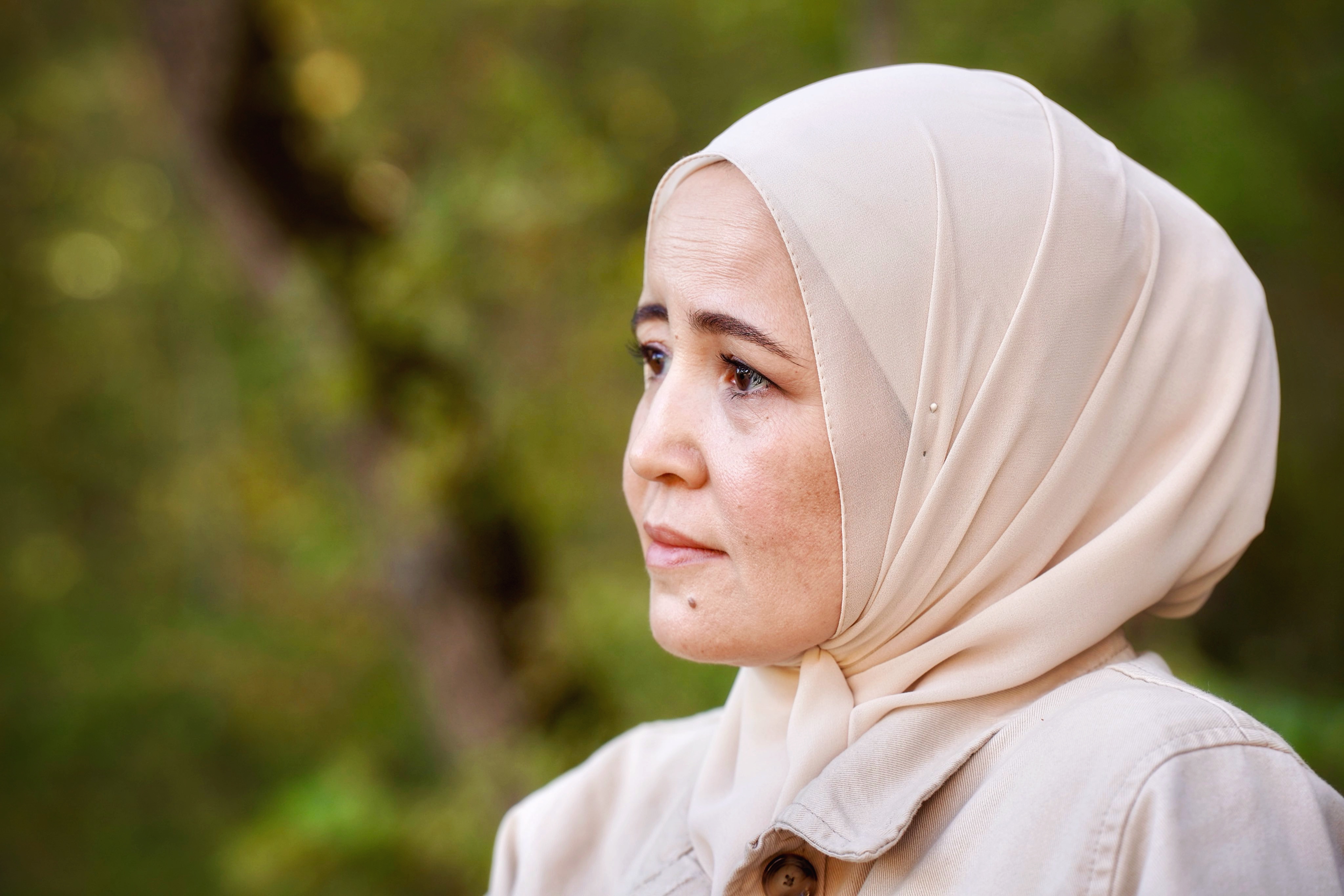
 Lutfiye Zudiyeva.
The renowned war 20th-century war photographer, Robert Capa, famously dreamed of “becoming unemployed,” hoping that an end to wars would diminish the need for the images he captured. In a way, I think we human rights defenders are similar: I, too, strive for a world with less injustice, where my human rights work is less needed.
More than once, I have tried to understand where this unrestrained desire to protect others comes from. Every time I think about it, I remember my father. He taught me that this love for protecting people is not just a feeling, but a responsibility.
I was 12 when he first took me to the main square of Simferopol, Ukraine. Every year on 18 May, after returning from exile, Crimean Tatars gathered there peacefully in memory of the victims of the 1944 deportations. Back then, my grandparents were among 200,000 or more Tatars forcibly deported from Crimea, Ukraine, to Uzbekistan. Nearly half of my people died in the first year after deportation.
I still remember the noise of the crowd in that square, the bright banners, the voices around me. They demanded rehabilitation and the right to live freely on their land. It was there, next to my father, that I first felt a deep connection to my people and their history. It was there that I realised: human rights that seem natural and self-evident are not a given – they are something you have to fight for.
Seven decades after mass deportations, 2014 marked another sinister turning point, as people residing on the Crimean peninsula found themselves under immense pressure: everyone was at risk of home raids, family separation, harassment and intimidation. Critics were arbitrarily arrested, HRDs and journalists persecuted, and religious and cultural organisations targeted. Many were forced to leave the peninsula, abandoning their homes and way of life.
Although political regimes have changed – from Stalinist to modern Russian – old methods of repression and fear have resurfaced. With each passing year, it becomes more difficult and dangerous to speak openly about human rights violations. The important role that HRDs play is being undermined globally.
In Crimea, HRDs like Server Mustafayev and Emir-Usein Kuku, among others, have been in Russian prisons for years. Many HRDs face administrative charges, harassment and detention, and some are stripped of their legal right to practise. In December 2025, security forces once again carried out searches of the offices of HRDs under the pretext of “operational search activities,” seizing documents and work equipment.
I have personally been detained and fined several times, my home searched, and my work equipment confiscated. On 16 May 2025, the Russian Ministry of Justice added me to the register of so-called “foreign agents”. The state officially declared my work as a journalist and human rights defender as “political”.
“Foreign agent” laws are increasingly being used to stop human rights work under the guise of the threat of “terrorism” and “national security.”
My efforts to challenge my “foreign agent” status proved unsuccessful.
My position was simple: journalism and human rights work are not “politics,” but an attempt to tell the truth.
When HRDs are seen as suspicious or hostile, we lose institutional protection—but more importantly, we are no longer seen as principled people. Society begins to perceive us as dissident “others,” rather than as individuals defending human rights.
Crimea is one example, but the stories I tell are replicated beyond my peninsula. I often think that human history moves in cycles: from order to chaos, and back to order again. The destruction wrought by major catastrophes motivates people to create institutions and agreements that will protect the world from repeating such tragedies.
Now, these mechanisms are being abused for political ambitions rather than their original purpose. Humanity faces a more complex task: to build a world order based not only on fear of the past and material well-being, but also on values and shared responsibility.
Technology is now developing faster than the laws meant to regulate it. Online repression has become a key means of targeting HRDs across the world. Artificial intelligence is being manipulated to target defenders in the form of surveillance and control. Clear rules and accountability are needed, so that technology protects people rather than violating their rights.
Like many of my colleagues, I feel a mixture of anxiety and hope. Across the world, the the rise of the right is growing, influenced by U.S. politics. We can see the knock-on effects – the strengthening of anti-immigration rhetoric, restrictions on protests, and more.
In Morocco, police have blocked peaceful marches against corruption. In Tunisia, students and trade union leaders risk arrest for participating in rallies. In Palestine, HRDs in Gaza continue to endure the risks and impacts of ongoing war and conflict. In Ukraine, Sudan, and Palestine, HRDs document destruction and human rights violations under grave danger, risking their lives to tell the truth about war crimes.
Hundreds of fellow HRDs patiently continue their noble path and inspire every day with a simple but important principle: the dignity of every person matters. Even in the most difficult conditions, despite the risks, they endure, to ensure that fear and silence do not prevail. Every small victory – the release of one person from unlawful imprisonment, the recognition of a violation in court, the ability to safely express an opinion – is a step toward justice. This is how real change happens.
However, for this movement to be sustainable and to effect long-term systemic change, we need consistent support from the international community, from governments, and from citizens. HRDs should be supported, and be able to live and work without fear, knowing that they are not alone. International institutions must focus on protecting those deprived of liberty for their human rights work – especially older people, the seriously ill, and women – ensuring their access to medical care, fair trials, and securing their immediate release.
Lutfiye Zudiyeva is a prominent Crimean Tatar woman human rights defender and member of the human rights organization Crimean Solidarity, which monitors politically-motivated trials in Russian-occupied Crimea and supports political prisoners and their families. She also works as a journalist for the Ukrainian media outlet Graty.

